
Premier Functional Medicine
An MRI may show the cause of nerve damage, but not always the damage itself. Here’s what you need to know about nerve damage detection.
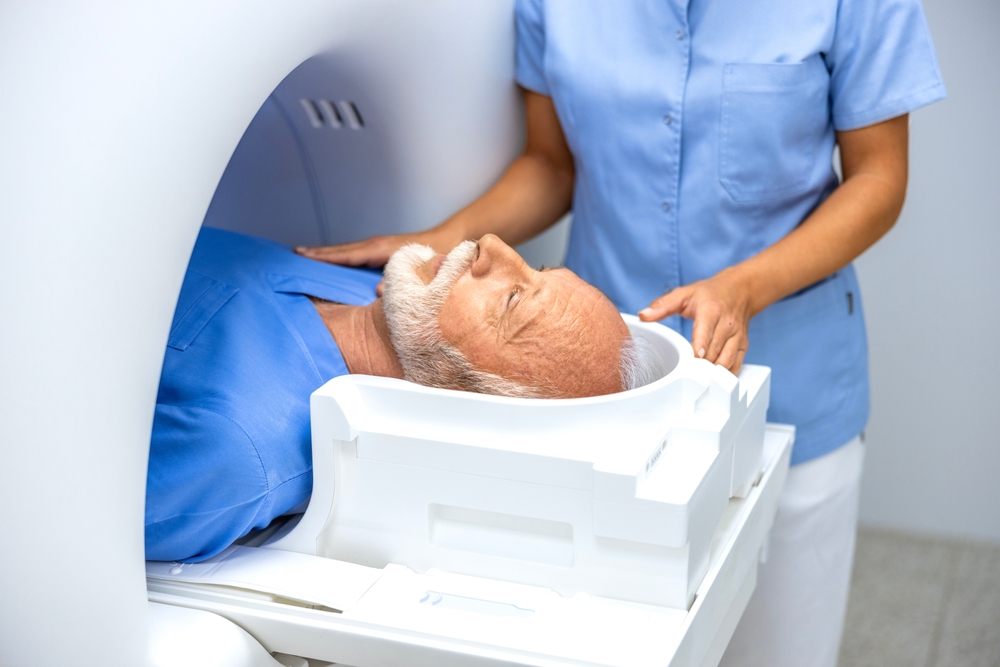
Magnetic Resonance Imaging (MRI) scans are one of the most commonly used diagnostic tools in modern medicine. When something feels "off" about your body, an MRI can help pinpoint the reason why. If you’re dealing with nerve -related symptoms like numbness, tingling, burning pain, or muscle weakness, you may be wondering, " Would an MRI show nerve damage?”
The short answer is: sometimes—but not always. An MRI can be incredibly useful for identifying certain types of nerve-related problems, but it has limitations, especially for subtle or functional nerve damage.
Dr. Brian D. Anderson in Summit, NJ, guides patients through a more complete diagnostic process that looks beyond imaging alone to understand what’s truly happening in the nervous system.
An MRI uses powerful magnets and radio waves to create detailed images of the structures inside your body. Unlike X-rays or CT scans, it does not use radiation. Instead, it focuses on how hydrogen atoms in your tissues respond to magnetic fields, allowing it to produce highly detailed images of soft tissues.
This makes MRI particularly useful for evaluating:
For example, if a herniated disc is pressing on a nerve root in the spine, an MRI can often clearly show that compression. Similarly, it can detect tumors, inflammation, or structural damage that may be impacting nerve pathways.
Here’s where things get more nuanced.
An MRI is excellent at showing structural causes of nerve problems, but it does not directly measure how well a nerve is functioning.
This means you can have significant symptoms of neuropathy even if your MRI results come back “normal.” For many patients, this can be frustrating and confusing.
The most accurate answer is: an MRI may show the cause of nerve damage, but not always the damage itself.
If your symptoms are due to something structural—like compression, injury, or inflammation—an MRI can be very helpful. But if the issue is related to metabolic dysfunction, toxicity, or microscopic nerve fiber damage, it may not appear on imaging at all. This is why relying on a single test rarely gives the full picture.
Because MRI has limitations, other diagnostic tools are often used to assess nerve health more directly.
These tests measure how quickly electrical signals travel through your nerves. Slower conduction can indicate damage or dysfunction.
EMG evaluates the electrical activity of muscles, which can reveal whether nerve signals are properly reaching muscle tissue.
In cases of suspected small fiber neuropathy, a skin biopsy can be used to measure nerve fiber density. This is one of the more sensitive ways to detect subtle nerve damage.
Functional and conventional lab testing can identify underlying contributors such as:
A detailed neurological exam looks at reflexes, sensation, strength, and coordination. This approach remains one of the most important tools in identifying nerve dysfunction.
Identifying possible causes of nerve damage can be helpful in resolving your pain. Nerve damage, or neuropathy, can develop from a wide range of underlying causes. You may already know the cause of your nerve issues, but if not, consider which of these scenarios may have played a role.
Chemotherapy-induced peripheral neuropathy (CIPN) is one of the most common causes. Certain drugs can directly damage nerve fibers and disrupt their function.
Chronic high blood sugar can damage small blood vessels that supply nerves, leading to gradual nerve degeneration.
Deficiencies in nutrients like vitamin B12, B6, and folate can impair nerve function and repair.
Inflammation can irritate nerve tissues and interfere with proper signaling, especially when it becomes long-standing.
Heavy metals, environmental toxins, and even certain medications can contribute to nerve damage over time.
Conditions where the immune system attacks nerve tissue—such as certain forms of neuropathy—can lead to progressive symptoms.
Injuries, repetitive stress, or structural issues like herniated discs can compress or damage nerves.
Each of these causes requires a different approach. Treating symptoms without understanding the underlying driver often leads to incomplete results.
Getting answers about nerve damage is important, but it’s only the beginning.
Many patients receive imaging or test results that confirm a problem, but are left without a clear recovery plan. In some cases, they are told to “wait and see” or manage symptoms with medications alone. While symptom management can be helpful, it doesn’t address the deeper issues that led to nerve damage in the first place.
Once nerve damage is identified, the focus should shift to restoring function at the root level.
Lowering inflammation creates a more favorable environment for healing and reduces ongoing irritation of nerve tissues.
Nerves require specific nutrients to repair. Identifying and correcting deficiencies is a key step in recovery.
Healthy mitochondria are essential for energy production within nerve cells. Supporting this system helps improve nerve resilience and regeneration.
Better blood flow ensures that oxygen and nutrients reach damaged nerve tissues.
Functional approaches can help retrain nerve pathways and improve communication between the brain and body.
This kind of multi-layered strategy is central to functional medicine. Instead of focusing on a single symptom or test result, it looks at how all systems interact.
So, would an MRI show nerve damage? Sometimes, but not always. And when it doesn’t, it doesn’t mean your symptoms aren’t real or that nothing can be done.
Understanding nerve health requires a broader perspective that includes structural, metabolic, and functional factors.
If you’re ready to explore a more complete approach to diagnosis and recovery, speaking with Dr. Anderson can help you take the next step. With the right strategy, it’s possible to support nerve repair, reduce symptoms, and improve your quality of life. Click here to get started.

